FR4 & Rogers PCB Manufacturer
Material Basics
Understanding FR4 and Rogers PCB Materials
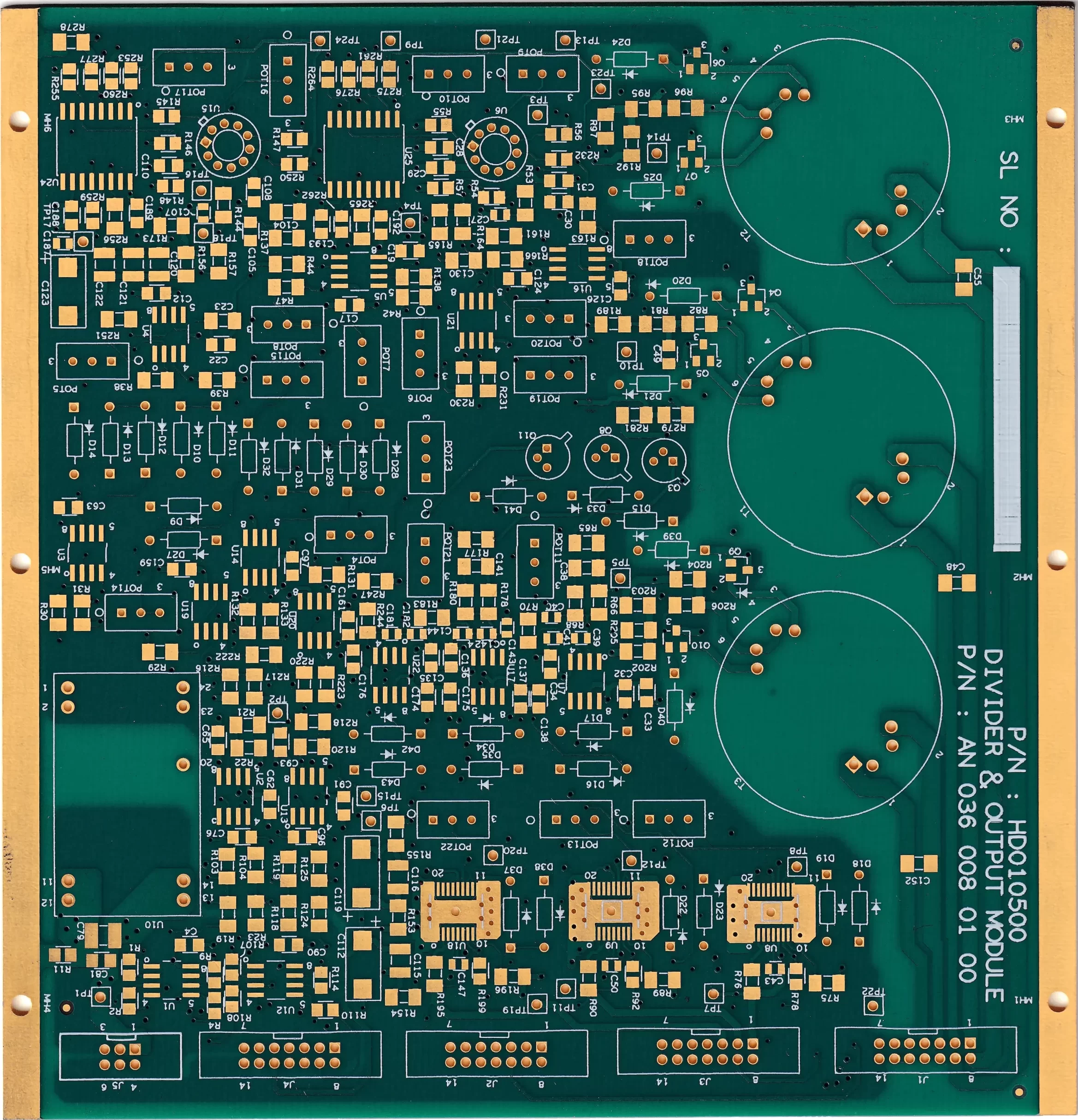
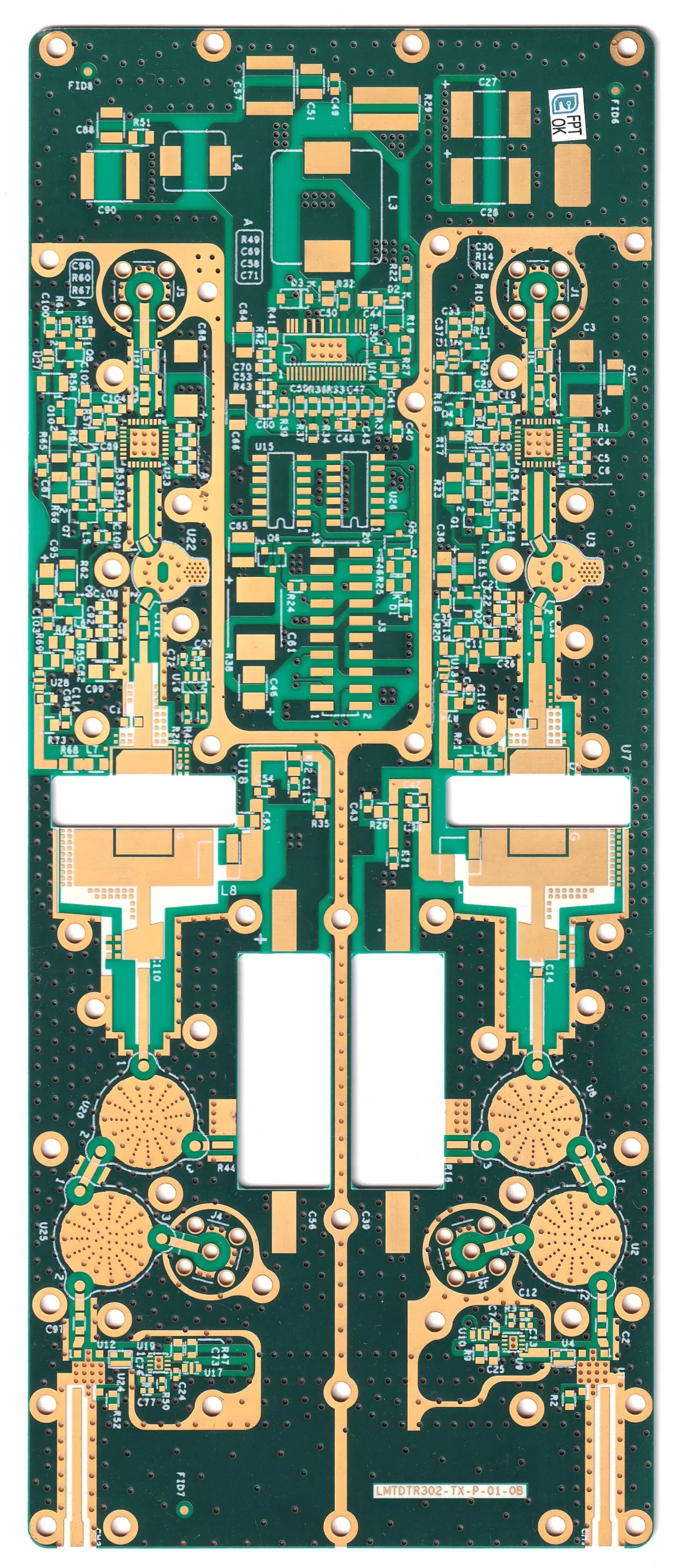
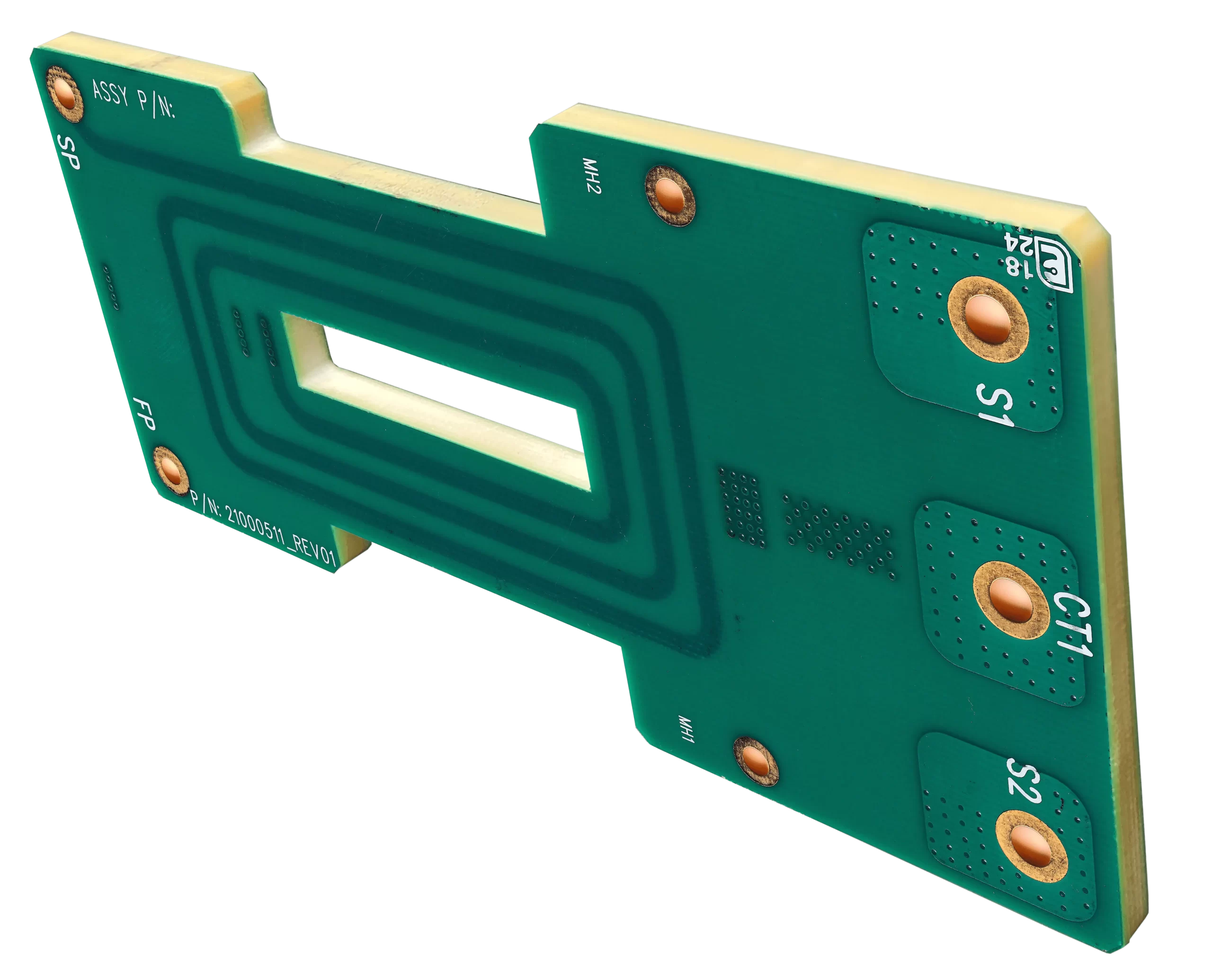
FR4 is a glass-reinforced epoxy laminate that handles most general-purpose electronics reliably and at lower cost. Rogers laminates use PTFE or ceramic-filled substrates engineered for a stable dielectric constant and low loss tangent at high frequency, which is what RF and microwave circuits actually need to perform.
Choosing between them isn’t about which material is “better.” It’s about matching dielectric behaviour to your signal frequency, so the board performs the way your schematic assumes it will.
FR4 substrate
Rogers substrate
Choosing Right
FR4 vs Rogers: Which Substrate Fits Your Design
FR4 works well below a few gigahertz, where cost matters more than dielectric precision. Past that point, signal loss and impedance drift start working against your design, and Rogers material becomes the practical choice.
Not every board needs a full Rogers stack-up. A Rogers-FR4 hybrid puts RF-grade material only where the signal path demands it, holding performance where it counts without paying Rogers pricing across every layer.
- Loss tangent: Rogers holds signal loss lower at high frequency.
- Dielectric constant: Rogers stays stable across temperature; FR4 varies more.
- Cost: FR4 costs less per panel: Rogers costs more per layer.
- Thermal stability: Rogers resists CTE mismatch better under RF load.
- Typical use: FR4 fits digital and power boards; Rogers fits RF paths.
- Hybrid option: Mixed stack-ups target Rogers only where frequency demands it.
In-House Build
How We Manufacture FR4 and Rogers PCBs
Step 1
Laser Direct Imaging
Sub-25 micron accuracy on outer layers, no film registration drift.
Step 2
Lamination handling
Dissimilar materials pressed and bonded in-house, no outsourced step.
Step 3
Surface finish
ENIG or HASL applied to match your RF or digital requirement.
Step 4
Final inspection
Every board tested before it ships, not a sample batch.
Verified Quality
Quality and Inspection Standards for RF-Grade PCBs
A registration error invisible on a standard FR4 board can shift impedance enough to fail an RF circuit. That is why inspection on mixed-dielectric and Rogers boards runs on every unit, not a sampled batch.
Automated optical inspection catches copper and trace defects before a board moves further down the line. Fly probe testing verifies electrical continuity without the cost of a dedicated test fixture, useful for prototype and low-volume Rogers runs.
Impedance measurement and CMI copper thickness checks confirm the board matches its stack-up specification, not just its visual appearance. This matters more on RF boards, where a thickness variance that FR4 tolerates can measurably shift a Rogers board’s performance.
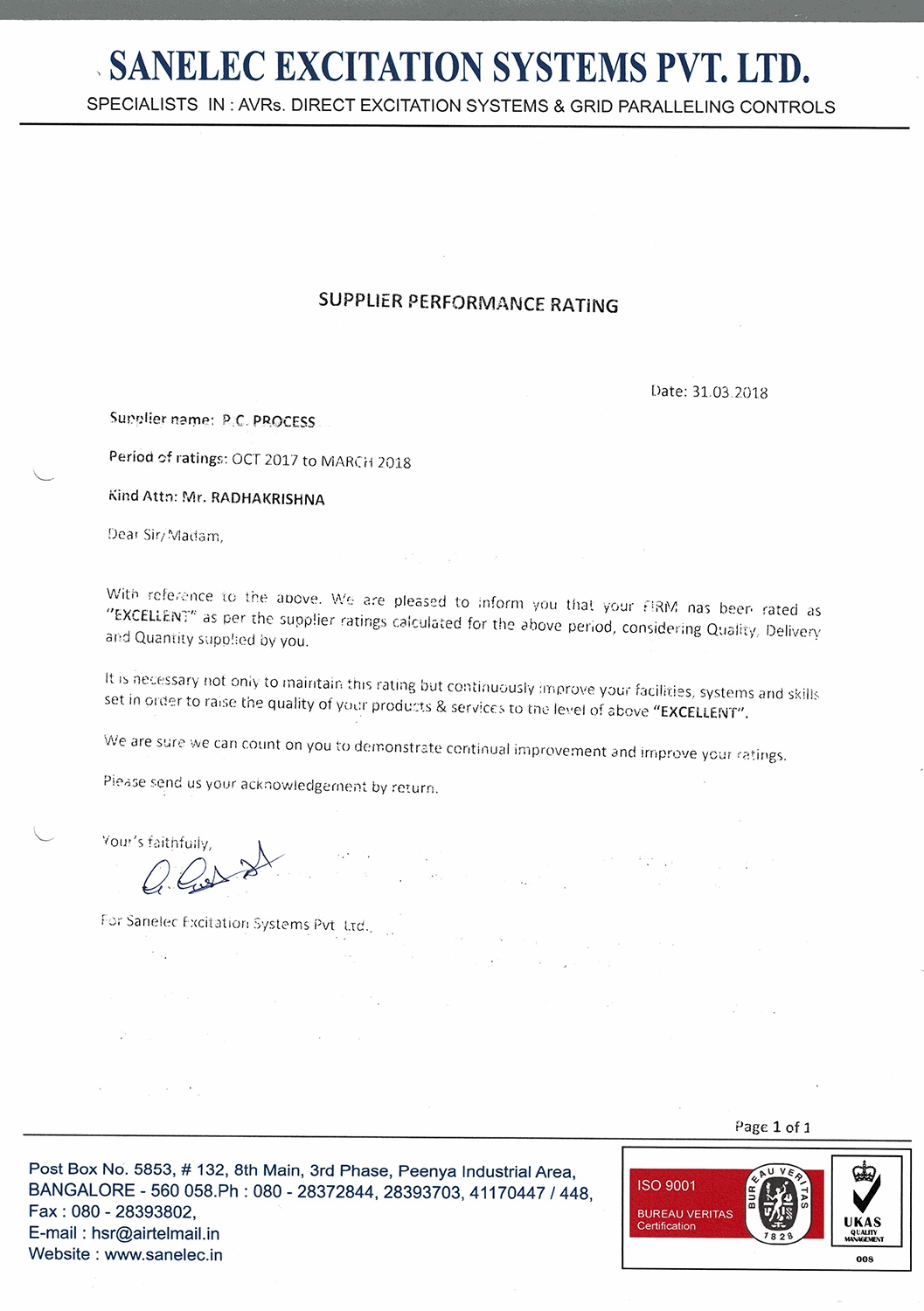
PC Process holds ISO 9001:2015 certification and LCSO qualification under JSS 52302, the Indian Ministry of Defence supplier standard. For defence and aerospace procurement teams, that qualification carries weight most PCB vendors in India cannot claim.
Since 1983
Why PC Process for FR4 and Rogers PCB Manufacturing
- 43+ years in operation: Manufacturing PCBs in Bangalore since 1983, without a break in continuity.
- Complete in-house production: DFM to final test happens on one site, with full traceability at every stage.
- On-site ETP: Wastewater treatment plant on premises, meeting environmental compliance without third-party dependency.
- Certified quality system: ISO 9001:2015 and LCSO/JSS 52302 back every board leaving the facility.
Related Capabilities
Explore Our PCB Manufacturing Services
Multilayer PCB
Up to 24-layer builds for complex stack-ups.
Prototype PCB
Fast-turn boards for design validation and testing.
Heavy Copper PCB
Enhanced copper thickness for high-current applications.
FR4 & Rogers PCB
Substrate options suited to RF and standard designs alike.
Custom Blind & Buried Via PCB
Tailored via structures matched to stack-up needs.
Quick Turn PCB
Accelerated timelines without skipped inspection steps.
Client Feedback
What Our Customers Say About PC Process
Sectors Served
FR4 and Rogers PCBs Across High-Reliability Industries
Defence
LCSO certified under JSS 52302, trusted by HAL and BEL for RF-sensitive builds.
Space and Aerospace
Supplying ISRO with boards held to exact dielectric and impedance tolerances.
Telecom
RF and high-frequency boards for network infrastructure and signal transmission hardware.
Medical Electronics
Precision boards for diagnostic and monitoring devices, built under ISO 9001:2015 controls.
Industrial Automation
Trusted RF PCB manufacturer in India for sensor networks and process control hardware.
Research Institutions
Prototype and RF boards supporting IISc and IIT Madras research and development programs.
Trusted By
Organisations That Trust Our PCB Manufacturing






















When should I use Rogers instead of FR4?
Is Rogers material PCB suitable for RF applications?
What is a Rogers-FR4 hybrid PCB?
Can PC Process manufacture mixed-dielectric hybrid boards?
What certifications does PC Process hold for defence-grade PCBs?
Does PC Process inspect every Rogers PCB or only a sample batch?
What surface finishes are available for Rogers PCBs?
Why does lamination accuracy matter more on Rogers boards than FR4?
Does PC Process manufacture prototype quantities of Rogers PCBs?
What is the dielectric constant difference between FR4 and Rogers?
Common Questions